Luggage Size
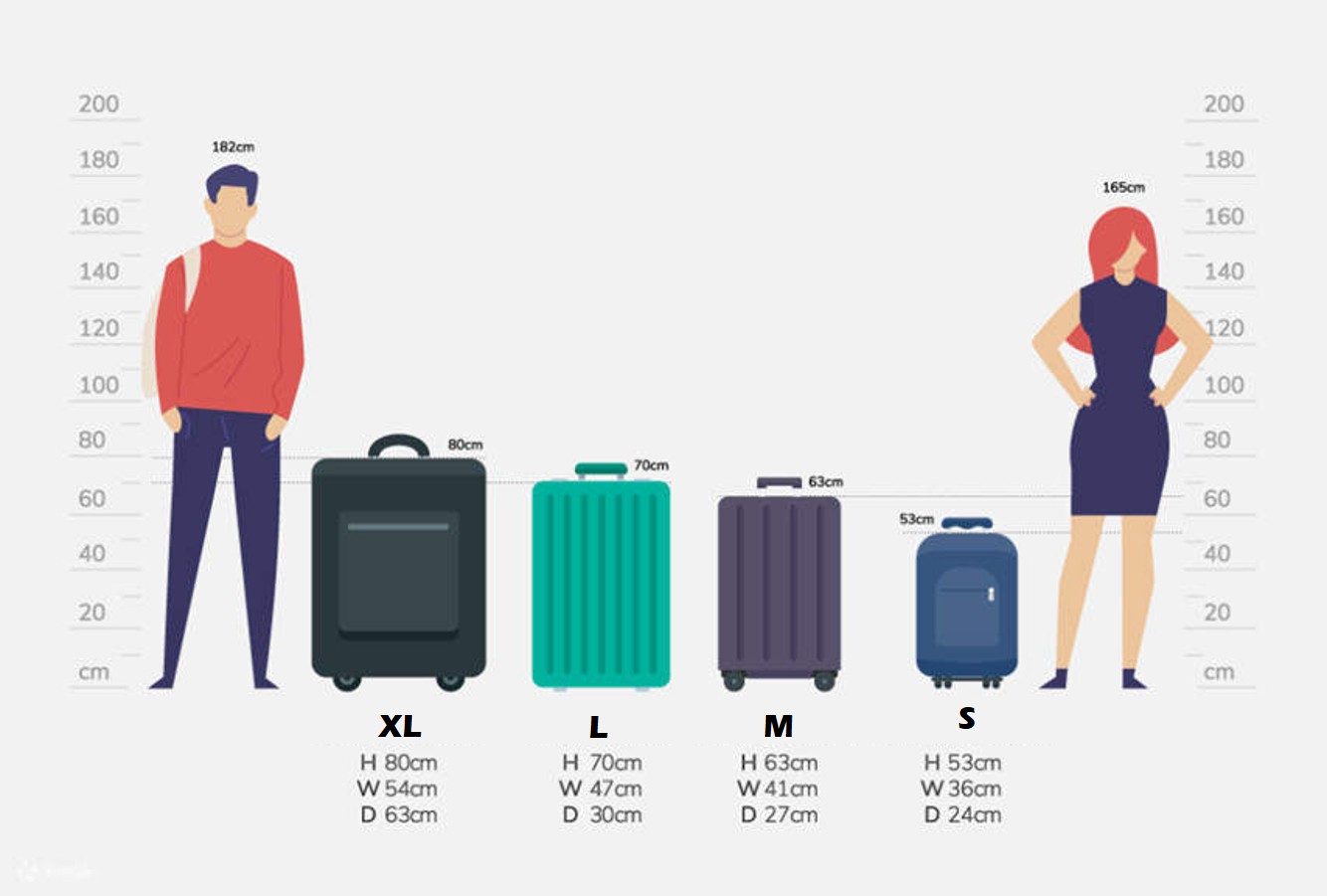
| Size | Suitable Size | Luggage Heigh | Luggage Width | Luggage Thickness |
|---|---|---|---|---|
| S | 18 - 21 inch | 48 - 53 CM | 32 - 36 CM | 20 - 24 CM |
| M | 22 - 24 inch | 58 - 63 CM | 37 - 41 CM | 23 - 27 CM |
| L | 25 - 28 inch | 65 - 70 CM | 42 - 47 CM | 26 - 30 CM |
| XL | 29 - 32 inch | 72 - 80 CM | 48 - 54 inch | 29 - 33 inch |
| Luggage Size Chart Maker : SSize.com | ||||
About Luggage Size
How is the standard size of luggage determined?
1. International Air Transport Association (IATA).
Provides widely adopted recommendations for carry-on luggage (typically 55 x 35 x 20 cm or a 115 cm linear total).
2. International Organization for Standardization (ISO).
Develops technical standards (e.g., ISO 20690 for luggage testing) that manufacturers follow, ensuring quality and dimensional consistency.
3. Airlines Themselves.
They set the enforceable rules. These vary significantly between full-service and low-cost carriers.
4. Aircraft Manufacturers.
Designs of overhead bins and cargo holds (like the common "LD3" container) create the physical limits that airlines must work within.
How to choose a suitable luggage size?
Choosing the right luggage size is a balance between your packing needs, travel style, and airline restrictions. Here’s a step-by-step guide in English to help you decide.
1. Consider Your Trip Type & Duration.
A quick rule of thumb:
Weekend Trip (2-4 days): Carry-on (approx. 20-22 inches / 40-55L). Ideal for short getaways. You can avoid checked baggage fees and save time at the airport.
Week-Long Trip (5-10 days): Medium Checked Bag (24-26 inches / 60-80L). The most versatile choice for most travelers. Offers ample space without being overly heavy when empty.
Extended Trip (10+ days), Cold Weather, or Specialized Travel: Large Checked Bag (27+ inches / 90-120L). Necessary for bulkier items, multiple climates, or long-term travel. Be mindful of weight limits.
2. Check Airline Restrictions (This is Crucial!).
Always verify with your specific airline before you buy or pack.
Carry-on: Dimensions are strictly enforced. Look for bags marketed as "international carry-on" for the most universal fit.
Checked Luggage: Focus on linear dimensions (height + width + depth). Standard checked bags are usually under 62 linear inches (158 cm). Oversized bags (over 63") incur high fees. Weight limits (usually 50 lbs / 23 kg for economy) are equally important.
3. Assess Your Packing Style & Needs.
Light Packer / Minimalist: You can likely manage with a carry-on for trips up to a week, especially if you plan to do laundry.
"What-If" Packer / Shopper: Opt for a medium or large checked bag to have extra space for souvenirs. Consider packing a collapsible duffel inside.
Business Traveler: A carry-on with a suit compartment or a garment bag might be essential.
Adventure Traveler: Durability, wheels (or lack thereof for rough terrain), and the ability to fit odd-shaped gear are key.
Final Checklist Before You Buy:
① Measure the bag (including wheels and handles) and compare it to your most-used airline's rules.
② Consider your physical ability to lift and maneuver it when full.
③ The "Two-Bag Solution": Many frequent travelers swear by a carry-on + a personal item (like a large backpack or tote) to avoid checking any luggage at all.
④ Pro Tip: When in doubt, size down. It’s easier to pack a little lighter than to deal with an oversized, overweight, and cumbersome bag.