




About National Standard Size
1. Clothing Size National Standards
A. United States & Canada
Standard: US sizes are unique and often criticized for being inconsistent, especially in women's clothing due to vanity sizing (where sizes are labeled smaller than the actual measurement to flatter the customer).
B. United Kingdom
Standard: UK sizes use different numbering for men and women and are generally more consistent than the US but still subject to brand variation.
C. European Union (EU)
Standard: The EN 13402 standard is based on body measurements in centimeters. This is the most logical and internationally-minded system.
D. Japan & South Korea
Standard: JIS (Japanese Industrial Standards) and KS (Korean Standards). Both are based on metric measurements but use different numbering.
E. China
Standard: GB/T 1335 (National Standard of the People's Republic of China).
2. Shoe Size National Standards
A. US & Canada: Based on the "Barleycorn" unit (¹⁄₃ inch). Men's and women's scales are different (Women's US size = Men's US size + ~1.5).
B. UK: Also uses barleycorns, but the scale starts at a different point. A UK size is typically 0.5 to 1.5 sizes smaller than a US size (e.g., UK 8 ≈ US 9).
C. EU (Europe): Based on the "Paris Point" (²⁄₃ cm). The formula is roughly: (Foot length in cm + 2) * 1.5. An EU size 42 is very common.
D. Japan & Korea: Uses the metric system directly—the number indicates the foot length in cm. A Japanese size 25 is for a 25 cm long foot. This is the most straightforward system.
3. Other Important National/Regional Standards
Electrical Plugs & Voltage: Varies by country (e.g., US: Type A/B, 120V; UK: Type G, 230V; EU: Type C/F, 230V).
Screw Threads: Imperial (UNC/UNF) vs. Metric (ISO). The US, UK, and Canada use Imperial; most of the world uses Metric.
Building Materials: Lumber dimensions (e.g., a "2x4" in North America is actually 1.5" x 3.5") versus metric timber sizes elsewhere.
Key Takeaway
There is no single "national standard size." The correct system depends entirely on:
① The Country/Region you are in or buying from.
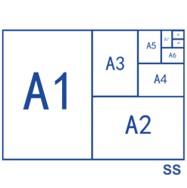
② The Product Category (clothing, shoes, paper, hardware).